Iran Rising: Iran’s Long Night Breaks

Iran Breaks Forty Seven Years of Isolation
For forty seven years, Iranians learned how to live with weight on their chests. A system of repression pressed into daily life so completely that silence became instinct. Families lowered their voices. Grief was swallowed whole. Hope was measured carefully, if expressed at all. Survival meant endurance.
On Sunday, people stepped back into the streets.

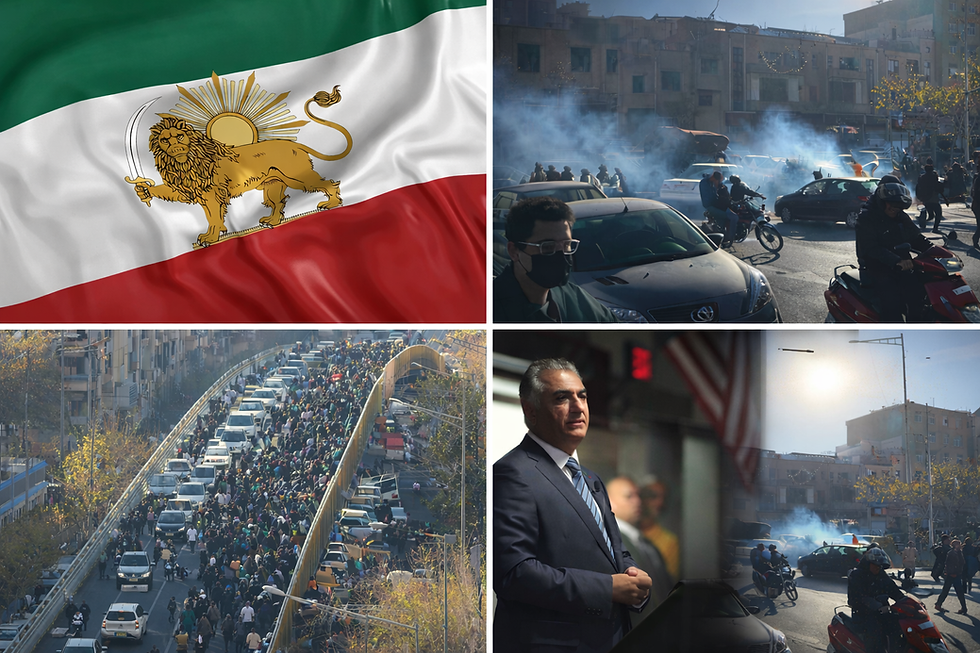
Crowds fill streets across Iran as decades of enforced silence give way to nationwide protest.
They came again the following day. And then again. What began as presence became persistence. What held became undeniable. We watched Iran Rising.
By January 2, the protests had reached their sixth day, and the shape of the moment was clear.
Across Iran, people who did not know one another, who could not communicate freely, who lived under surveillance and internet restriction, were making the same choice at the same time. They were showing up. They were staying. They were speaking the same language of refusal and resolve.
From city to city, province to province, the same conclusions surfaced on their own. The same judgments were reached. The same courage held. Without instructions moving through channels or orders handed down, millions acted from a shared understanding that had been forming quietly over years of lived experience.
For decades, the regime had worked to fracture Iranian society, to divide it by ideology, class, ethnicity, and fear. What appeared in those days was the opposite. A people moving from internal alignment, shaped by memory and endurance, now visible in public.
A Country Moving in Unison
As night fell, the streets did not empty. They filled again.
In Tehran, voices rose from Haft Hoz, Tehran Pars, Narmak, Nazi Abad, Sadeghieh, Khak Sefid, Satarkhan, and Shahrak e Gharb, stretching across both West and East Tehran. In Alborz Province, people gathered in Gohardasht, Fardis, and Karaj. In Fars, Marvdasht and Shiraz, particularly the Maali Abad district, remained alive with protest. Lorestan answered from Koohdasht, Azna, Khorramabad, and Borujerd. In Khorasan, Mashhad, Neyshabur, and Bojnurd stayed in motion. Beyond these regions, Qom, Hamedan, Rasht, Bandar Abbas, Shahrud, Qazvin, Tabriz, Varamin, Kermanshah, Yasuj, Isfahan, Haftshjan, Shahrekord, and the Taqanak district joined the same call.
This mattered. The spread denied the state a single target. Security forces were pulled thin, pushed from one city to the next. Authority became reactive. Control slipped from fixed points into open terrain.
What the Streets Endured
The response followed a familiar pattern. Live ammunition was used against crowds. Tear gas filled protest zones, including in Qom. Arrests accelerated. Internet access slowed, then disappeared. Marvdasht went dark. Wide disruptions spread across Fars Province.
The aim was separation. Remove individuals. Break momentum. Quiet the streets.
The result was the opposite.
When crowds were dispersed, they regrouped nearby. When access was blocked, people moved to adjacent neighborhoods. Protest resumed, hour after hour, night after night. The movement adapted without instruction because it did not rely on it.
When Grief Became Public Truth
By this stage, funerals were no longer private rituals. They became moments of national reckoning.
In Koohdasht, the funeral of Amir Hesam Khodayari marked a turning point. His father stood before mourners and rejected the claim that his son had been a Basij member. The response was immediate. The crowd affirmed the truth, dismantling the official narrative in full view.
In Marvdasht, the burial of Khodadad Shirvani Monfared brought renewed confrontation. Security forces intensified their presence. Internet access was cut again. Even in death, the state failed to reclaim control of the story.
These funerals did not quiet the country. They clarified it.
The Words That Traveled Everywhere
Across cities and provinces, the language of protest did not fragment. It converged.
“Javid Shah.” Long live the Shah.“Marg bar diktator.” Death to the dictator.“Marg bar Khamenei.” Death to Khamenei.“In akharin nabard ast, Pahlavi barmigardad.” This is the final battle. Pahlavi will return.“Emsal sale khun ast, Seyed Ali sarnegoun ast.” This year is the year of blood. Seyed Ali will fall.“Zan zendegi azadi.” Woman. Life. Freedom.
These words carried through Tehran neighborhoods and provincial streets alike, heard in Mashhad, Isfahan, Qazvin, and far beyond. Thousands of voices, separated by distance and circumstance, arrived at the same conclusion without instruction or rehearsal.
Bearing Witness to History
Documentation became essential. Videos, photographs, and eyewitness accounts circulated not as spectacle, but as record. What is seen cannot be undone. What is documented survives intimidation.
Discipline mattered. Peaceful resistance preserved moral authority, exposed state violence, and drew international attention. This restraint was not weakness. It was intention.
By the end of January 2, Iran’s protests no longer appeared episodic. They formed a national testimony, written across cities and nights, carried by people who had endured forty seven years of enforced silence and chose, together, to speak.
This was not only the sound of unrest.
It was the sound of a nation remembering itself.